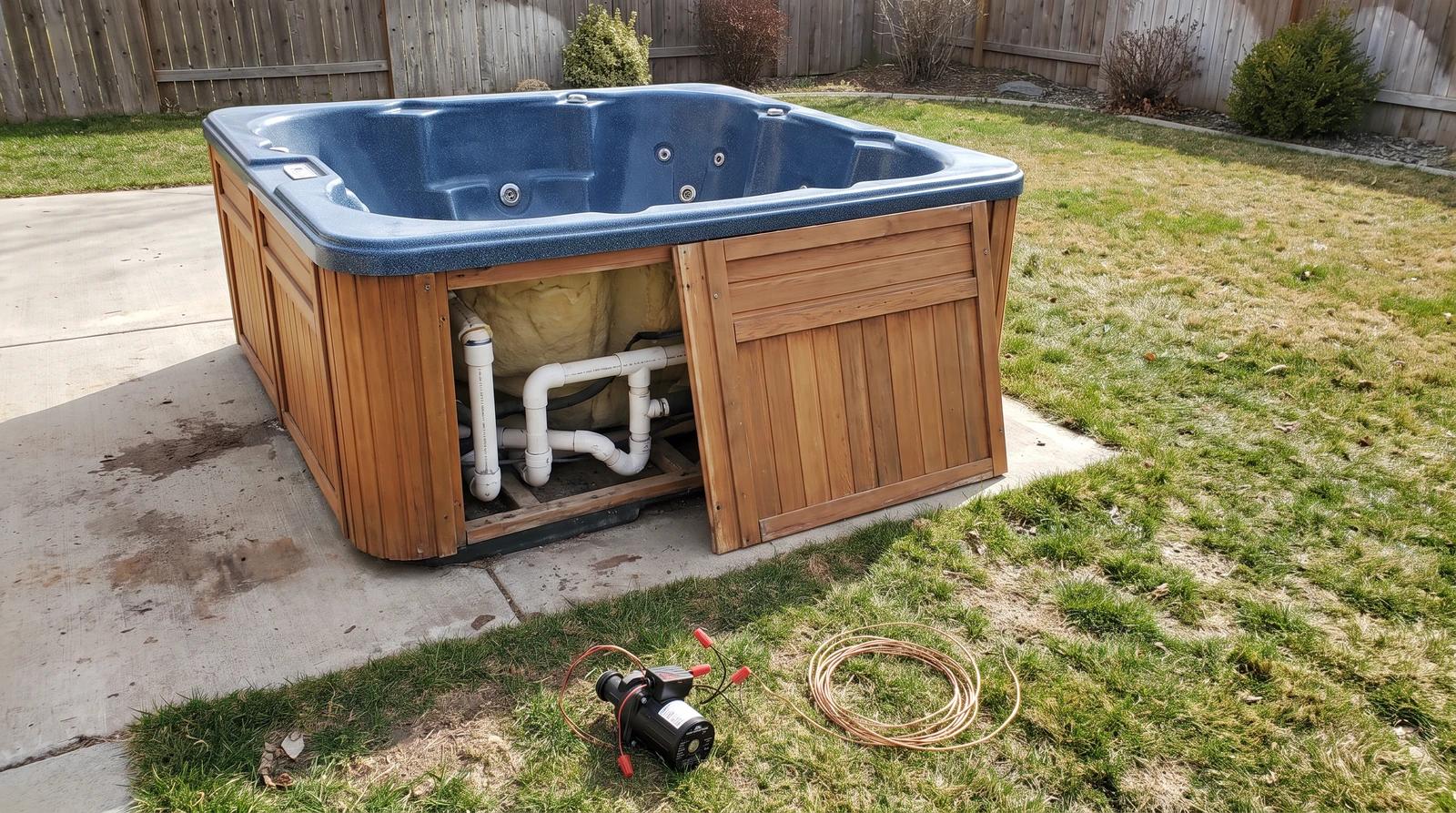
How to Disconnect a Hot Tub for Removal and Where Every Piece Ends Up
Knowing how to disconnect a hot tub for removal matters, but the bigger question is where it all goes once it leaves your yard. A hot tub isn't one thing. It's a shell, a cabinet, a pump, a heater, a cover, some wiring and a lot of water, and each part goes somewhere different.
To cut the power, turn the breaker off at the panel, then the outdoor shutoff box, then test before anyone opens a side panel. After that, some of it can be donated, some recycled, and the rest goes to disposal. How you take it apart decides which pile each part lands in.
Where an old hot tub actually ends up
An old spa can leave your yard three ways, and most jobs use more than one.
Donation, if it still runs
A working unit with a solid shell is worth something to someone. Local listings around Meridian, Nampa and Caldwell draw people looking for a used one.
The catch is the pickup. Whoever takes it has to haul it, and plenty of free ones stay put once people see the gate. Before you set a time, ask whether they've measured the path out and lined up a way to move it.
If you're giving it away, leave it running until the new owner has seen it heat and the jets work, and only then shut it off.
Recycling, for the metal
The pump, motor, heater and copper wire can often go to a metal recycler, along with any metal frame under the cabinet. Recyclers usually want metal in pieces, free of foam and plastic, so ask what they take before you load.
Disposal, for what's left
The shell is usually acrylic over fiberglass, which is hard to recycle, and so are the foam insulation inside many cabinets and a worn cover. Those go to the landfill. The Ada County landfill takes bulky items, and Canyon County runs its own. Check their current rules, hours and fees before you load up.
| Part | Where it usually goes |
|---|---|
| Working unit, whole | Donation or sale |
| Pump, motor, heater | Metal recycling |
| Copper wire and metal frame | Metal recycling |
| Steps, handrails, cover lifter | Reuse, if they're in good shape |
| Shell, foam and worn cover | Landfill |
Heads up: Leftover sanitizer and balancing chemicals don't belong in the trash or the drain water. Take them to a household hazardous waste drop-off. Your county can tell you where.
How to disconnect a hot tub for removal, one safe step at a time
A lot of guides say to flip a switch and move on. A safe shutdown means turning it off in two places and then proving it's off.
Turn off the breaker, then the shutoff box
Start at your main panel and turn off the tub's breaker. You don't need to kill the whole house. The exception is a panel with no labels, which is common in older homes in the North End or on the Bench. Look for a large double breaker that doesn't match anything else, and if you still can't tell, shut off the main.
Then find the outdoor shutoff box, a gray metal box on a wall or post nearby. On a hard-wired spa, that box is the disconnect electrical codes call for: within sight of the water, but set back from it. Switch it off, or pull out the block inside if yours has one. A plug-in model is simpler: switch off the topside controls and unplug it.
Test before anyone touches a panel
Switching things off isn't the same as checking. Use a non-contact voltage tester at the shutoff box and near the control pack, then press the topside controls. If anything lights up, hums or beeps, something's still live. A cheap tester from any hardware store is how you make sure there's no power before removing a single side panel.
Quick tip: Put tape over the breaker and write "do not turn on" on it. Sooner or later, someone in the house will try to fix the dead patio outlet.
Where your part stops
Stop if the breaker doesn't kill it, if there's no shutoff box, or if you find wire spliced into a box under the deck. Those are complex wiring connections, and they're a job for an appropriate qualified professional, which here means a licensed electrician. The same goes if you can't tell how many circuits feed it, or if you find DIY disconnect wiring a past owner left behind: cable buried without conduit, a shutoff box with no cover, or wire that doesn't match.
Once it's gone, the electrician can cap the circuit and pull the wire and breaker, or leave it ready for a new one. Any copper they pull can be recycled too.
Worth asking: If another spa might go in later, tell the electrician before they cap anything. Keeping a circuit is usually simpler than running a new one.
Taking it apart so every piece has somewhere to go
Once everything is off and tested, you can dismantle your hot tub with the end in mind. The better you sort things now, the less ends up in the landfill.
Drain it, and think about where the water lands
Hook a garden hose to the drain spigot near the base, or use a submersible pump to move the water faster. Stop adding sanitizer a while before you drain, and send the water onto the lawn, not the street or a storm drain. If it's sat unheated through a freezing winter, there may be ice in the lines, and it won't drain well until that thaws.
Pull the accessories first
Take off the cover, the steps and anything bolted on, like a cover lifter, handrails or an umbrella base. Wear gloves, since old brackets and screws can be rusty and sharp. Doing accessory removal first keeps them out of your way, and the good ones go straight into the reuse pile.
Whole, or in pieces
If it sits freestanding on a pad, with a wide gate and a clear path, it can often roll out whole on a heavy dolly. That's also its best shot at being donated.
A narrow side yard, steps or a deck overhead usually means it gets cut. When we work through a tight spot like that, we break it down where it sits and sort as we go: metal in one pile, shell and foam in another. If you're doing it yourself, work from the top down so each section stays light enough to carry.
An in-deck setup means pulling up decking first, and a built-in surround adds another step. Hot tub disassembly often involves heavy panels, foam that gets everywhere and a shell that's heavier than it looks. Wear eye protection and gloves with real cut protection the whole time, since sawn fiberglass edges are sharp.
No DIY teardown on a live cabinet
The heater, pump and control pack sit inside the cabinet, with wiring running right through it. A saw doesn't know what it's hitting, so take a panel off and look before you cut. Some setups run on more than one circuit, especially if someone added lights or a separate pump later. Shut off every circuit you find and test again before any DIY teardown starts.
Hauling it yourself or handing it off
To haul it yourself, you'll need a trailer that fits the shell (a pickup bed usually won't), a few strong helpers, a dolly, and a saw if it has to come apart. Split the loads: metal to the recycler, the rest to the landfill.
If you hire it out, we price the job by the space and the work involved. Here's what moves the price up or down:
- Size and weight
- Access: gates, steps, slopes and side yards
- Setup: freestanding on a pad is simplest, while in-deck or a built-in surround means more work first
- Whether it rolls out whole or we break it apart on site
- Disposal type: what can be donated or recycled and what goes to the landfill
You get a firm price at a free on-site estimate before anything is touched. There are no hidden fees, and same-day work is possible when the schedule allows. If there's a deck or pool around it, mention that at the estimate so the plan accounts for it.
If you'd rather hand off the whole job, reach out to Boise Hot Tub Removal for a free estimate anywhere in the Treasure Valley.
Frequently asked questions
Do I need an electrician to shut it off?
No. You can turn off the breaker and the shutoff box and test it yourself. Capping or moving the circuit is a job for a licensed electrician.
Will someone take an old hot tub for free?
If it still works, often yes. Leave it running until they've seen it heat, and make sure they can haul it and get it through your gate.
What parts of a hot tub can be recycled?
The pump, motor, heater, copper wire and any metal frame usually can. The shell, foam and cover usually can't.
Do I need a permit to remove a hot tub in Boise?
The Hot Tub Removal Services page covers what the service includes and how the estimate works.
Related reading: Does a Hot Tub Add Value to a Home or Property You're Selling? and Hot Tub Removal With a Crane: When You Need One and When You Don't.
Hauling away a freestanding one usually doesn't need one, but electrical work or tearing out a deck or built-in surround can. Check with the City of Boise or your city's permit office. We can handle the permit application for demolition work.
Want a Free Quote?
We'll give you an honest estimate for hot tub removal. If DIY makes more sense for your situation, we'll tell you.
Call (208) 692-3124More From Our Blog
How to Dispose of an Old Hot Tub Cover: Cut It Down or Haul It Whole
How to dispose of an old hot tub cover: open the seams, pull the foam and metal, cut it to fit your cart, or leave it on the tub for the removal crew.
How to Remove a Spa: Your Prep and What Hot Tub Removal Services Do
How to remove a spa in Boise: the breaker, water and path you handle before removal day, and what a Treasure Valley crew does from estimate to cleanup.
Can You Take a Hot Tub to the Landfill? What the Trip Takes in Boise
Can you take a hot tub to the landfill near Boise? Learn which county landfill to use, what to ask first, how to prep the tub and what moves the cost.
