Hot Tub Removal, HOA Neighborhoods, Boise: What to Check First
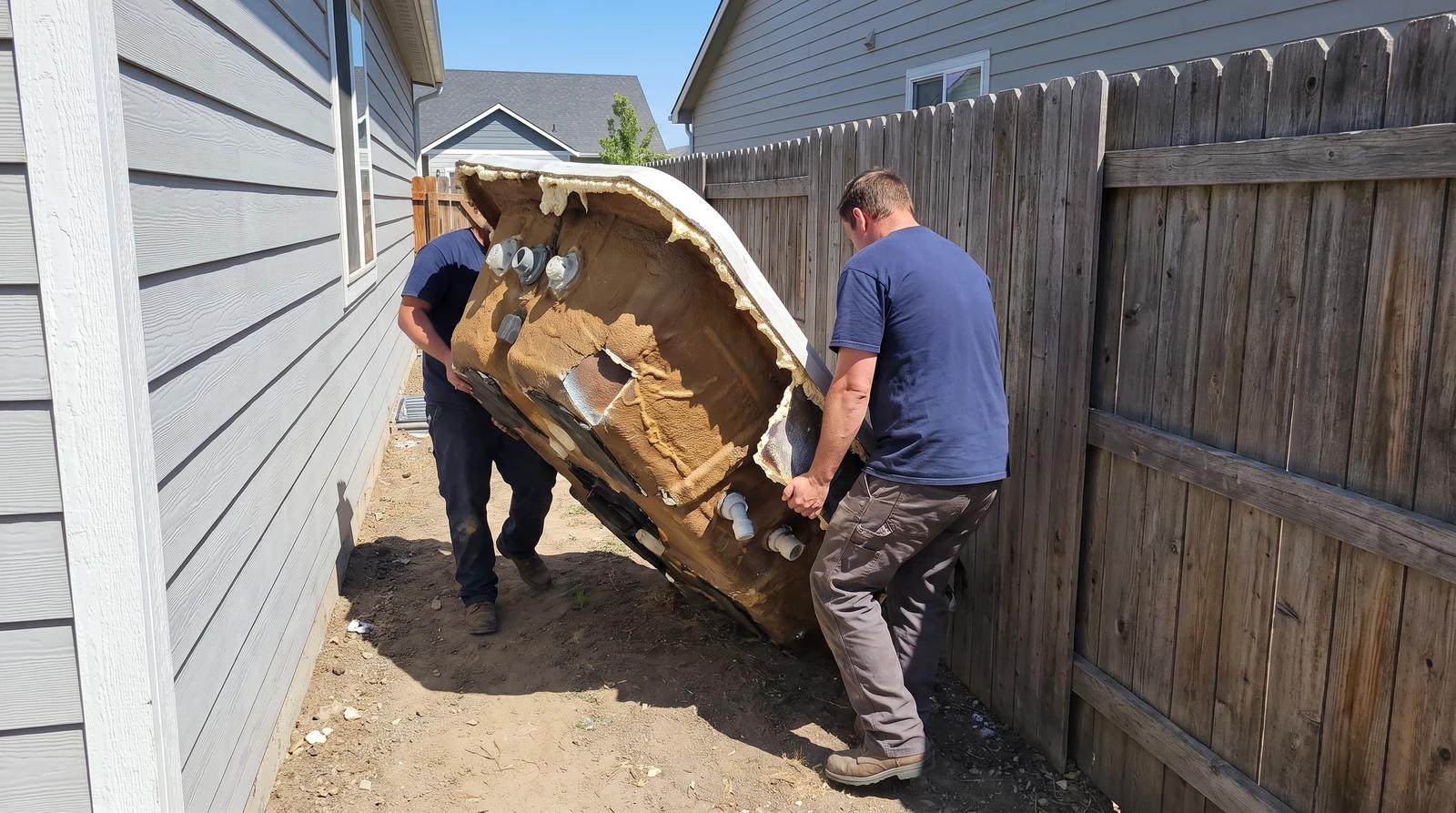
When it comes to hot tub removal, HOA neighborhoods, Boise ones included, mostly care about three things. They want to know how the tub gets out, when the work happens and what you do with the empty spot after. The spa removal itself is rarely the issue.
This isn't legal advice, and every association runs things its own way. But the same few questions come up in a lot of Treasure Valley subdivisions. You'll see them from Harris Ranch and the Bench to the newer neighborhoods along Meridian's Ten Mile corridor, out in Eagle and Star, and down in Kuna.
Hot tub removal in Boise HOA neighborhoods: does the HOA care?
Sometimes no. Sometimes yes.
Taking something out of your own backyard usually isn't the kind of change an architectural committee reviews. They tend to care about what you add, not what you take away.
The catch is everything around the removal. Say the crew needs to cross a common area, use a shared gate or work along a fence you share with a neighbor. That's where HOA rules can come into play. The same goes for what you plan to do with the spot afterward.
So the honest answer is to read your CC&Rs or check with your property manager before the removal date. A quick email now beats a letter from the board later.
Plenty of CC&Rs cover hot tubs and above-ground pools. Give that section a quick read, especially if you plan to put in a new spa.
Quick tip: When you email your HOA, describe the removal plainly. You're taking out an existing hot tub, nothing is being added, and the concrete base either stays or goes. A clear, short note usually gets a faster answer than a vague question.
How the hot tub gets out of the yard
A hot tub has to leave the yard somehow, so the path out comes first. In plenty of newer Meridian and Nampa neighborhoods, houses sit close together and side yards are narrow.
Common areas, greenbelts and shared fences
Sometimes the only open path runs along a greenbelt, a walking path or a common lawn behind the lots. That ground usually belongs to the HOA, not to you. Crossing it may need a quick OK. Some associations also like a heads-up so they can warn the landscapers.
If the hot tub can come out through your own gate, most of that goes away. When a spa won't fit through in one piece, we take it apart in the yard. We cut the shell into sections and carry the pieces out by hand. That's a normal part of spa removal, and it often means nobody has to touch common ground at all.
It takes the right tools to cut through the shell and its wood, steel or plastic frame. That's a big part of why hot tubs are hard to remove on your own.
Shared fences are the other thing to watch. If a fence panel has to come off, your neighbor has a stake in that fence. Sometimes the HOA does too.
Talk to them first. It's a lot easier than explaining afterward.
Work hours, noise and parking on spa removal day
Many HOAs set quiet hours or limit when contractors can work, mainly on weekends. And cutting up a hot tub isn't quiet. A saw going through a fiberglass shell and wood framing is loud for a while, then it's done.
Check whether your association has contractor hours and plan the day around them. Not sure? A weekday during normal working hours is usually a safe pick.
Parking can matter too. Some subdivisions have narrow streets, no-parking stretches or rules about work vehicles in the cul-de-sac. Mention anything like that when you schedule so it's sorted out ahead of time.
What's left after hot tub removal
This is the part people forget. Once the tub's gone, you've got a concrete slab, a gravel base or a square of dead grass. You've also got an electrical line that used to feed the spa.
Leave that spot as it is, and most HOAs won't care. But turning it into something new is different. A pergola, a bigger patio, a shed or a raised garden bed is usually the kind of change a committee wants to see first. Submit that plan on its own. Don't assume it's covered just because the removal is done.
If you plan to put in a new spa, get it approved before the old one leaves.
The pad, the deck and the old wiring
Pad removal is often a bigger job than spa removal. It's real demolition, and depending on the city and the scope, it may need a permit. Taking out a deck around the tub is its own demolition job, and the committee may want a say.
Boise, Meridian, Eagle, Garden City and the Canyon County cities each run their own permit process. Rural Gem County lots go through the county. So what's required in one place isn't always what's required down the road. We can handle the permit application for demolition work when it's needed.
The electrical line is its own thing. Most hot tubs run on their own circuit with a shutoff box nearby. The power has to be off at the breaker before removal starts.
Making that old line safe, or taking it out for good, is a job for a licensed electrician. Your city may want a permit for that work too.
What moves the removal cost and disposal
There's no single price for every hot tub. A big spa, stairs, a narrow side yard or a path across HOA ground add time and push the cost up.
Disposal matters too. Most hot tubs mix a fiberglass or acrylic shell with foam, wood and metal. Only some of that can be recycled.
Three common ways to get rid of an old hot tub:
| Option | What it takes |
|---|---|
| Give it away | No removal bill, but the new owner has to move it |
| Cut it up yourself | The right tools, help, a truck and your own dump trips |
| Full hot tub removal | We take it apart, carry it out and haul it off for disposal |
Then get your price before anything gets touched. Whoever you hire should come look first. We do a free on-site estimate and give you a firm price based on the space and the work involved, with no hidden fees.
Much of what we haul gets donated or recycled, and we take cash, card and Venmo.
Getting the tub and other items ready
Drain the tub before removal day if you can. Some associations care about water running into the street or storm drains. Letting it soak into your own lawn or landscaping is usually the safer bet.
Clear a path from the tub to the gate. Move patio furniture, planters, the grill and anything else in the way.
While you're out there, walk the route yourself. Look for low eaves, tight turns at the gate, sprinkler heads and soft lawn that could get torn up under a heavy load. Mention those when you book. That helps keep the crew off any HOA ground you don't need to cross.
Good to know: Tell us about any other items you want gone when you book. We can let you know at the estimate whether they can go in the same trip.
Before you book
In an HOA neighborhood, the hot tub itself is usually the easy part. The fences, greenbelts and rules around it are where a little planning pays off.
Check your CC&Rs, give your neighbors a heads-up, and decide what's happening with that empty spot before the day comes.
When you compare companies, ask if they're licensed and insured and whether they handle disposal.
We're a licensed and insured contractor serving Boise and the rest of the Treasure Valley. We offer hot tub removal and demolition. If you'd like someone to look at your yard and tell you what's involved, give us a call at (208) 692-3124. We're happy to come take a look, and there's no pressure either way.
Frequently asked questions about hot tub removal
How do I get rid of an unwanted hot tub?
If it still works, someone may take it and move it. If not, full hot tub removal, disposal included, is the simplest way to get it gone.
What is the cheapest way to get rid of a hot tub?
Giving it away costs the least. Doing it yourself takes tools, a truck and dump trips, so weigh that against paying someone to do it.
How much does it cost to dismantle and remove a hot tub?
It depends on the size of the tub, the path out, whether it gets cut apart and what else goes. A free on-site estimate gives you a firm price.
How do I decommission a hot tub?
The Hot Tub Removal Services page covers what the service includes and how the estimate works.
Related reading: Does a Hot Tub Add Value to a Home or Property You're Selling? and Hot Tub Removal With a Crane: When You Need One and When You Don't.
Turn off the breaker that feeds the tub and drain the water onto your lawn. Then have a licensed electrician handle the circuit.
Want a Free Quote?
We'll give you an honest estimate for hot tub removal. If DIY makes more sense for your situation, we'll tell you.
Call (208) 692-3124More From Our Blog
How to Dispose of an Old Hot Tub Cover: Cut It Down or Haul It Whole
How to dispose of an old hot tub cover: open the seams, pull the foam and metal, cut it to fit your cart, or leave it on the tub for the removal crew.
How to Remove a Spa: Your Prep and What Hot Tub Removal Services Do
How to remove a spa in Boise: the breaker, water and path you handle before removal day, and what a Treasure Valley crew does from estimate to cleanup.
Can You Take a Hot Tub to the Landfill? What the Trip Takes in Boise
Can you take a hot tub to the landfill near Boise? Learn which county landfill to use, what to ask first, how to prep the tub and what moves the cost.
