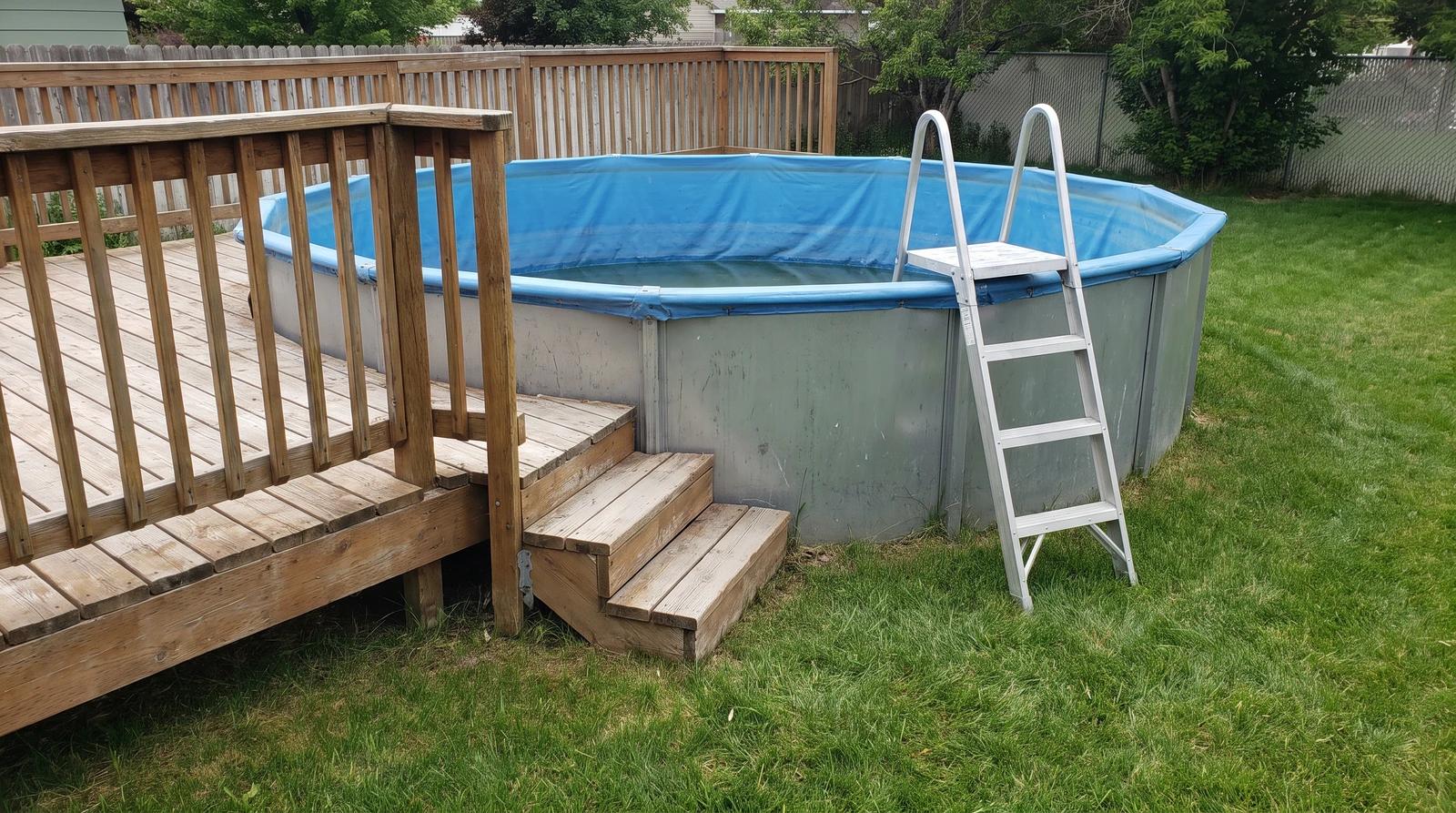
Are Above Ground Pools Considered Permanent? What Actually Decides It
Here's the short answer to "are above ground pools considered permanent": some are, and it depends on how each one was put in. Sides set partly into the ground, a deck built around it, and hardwired electrical or plumbing all push it that way.
One you can drain, fold up and store in the garage is a temporary structure. One that's dug in, decked over and wired to your panel acts like part of the property, whether you're in Boise's North End, Kuna or Nampa.
Boise Hot Tub Removal takes out hot tubs and spas around the Treasure Valley, and a hot tub or spa sometimes shares a yard with one of these. The test is simple: what has to come out with it?
Are above ground pools considered permanent?
One is considered permanent when it's tied to the property in ways that take real work to undo. If it comes down with a hose, a wrench and a free afternoon, most people call it temporary.
There's no single rule, and it also depends on who's asking.
When it's treated as temporary
A soft-sided or metal frame model on the lawn is about as temporary as it gets. It sits on flat ground, fills from a garden hose and plugs into an outdoor outlet. Nothing is buried or wired in.
Plenty of homeowners here drain these in the fall and put them away before the first hard freeze. That kind of storable pool is the simplest to deal with, on paper and at removal time.
What tips it the other way
A few things move it from easy to take down to part of the yard:
- Sides recessed into the ground, partly or fully buried, with dirt packed back against them
- A deck built around it, especially one attached to the house
- Hardwired electrical, meaning a dedicated circuit to the pump or heater plus the bonding wire that ties the metal parts together
- Plumbing run underground to an equipment pad
- A prepared base, like a leveled sand bed, pavers under the uprights or a poured concrete slab
One of these nudges it that way, and several together usually tip it.
Good to know: The same model can land on either side. It depends on the install, not the box it came in.
Who's asking: the city, your insurer, your HOA or a buyer
- The city looks at setbacks, fencing and electrical work. Residential building codes commonly require a barrier around swimming pools that can hold more than 24 inches of water, above-ground ones included. Hardwired circuits usually need an electrical permit too. Rules vary across the valley, so check with your building department.
- Your insurer may want to know it exists, since it adds liability. You may get questions about fencing, a locking or removable ladder and a cover.
- Your HOA may need to sign off on anything you can see from the street.
- A buyer and their inspector will look at its condition. A tired permanent above-ground setup with sagging boards can become a bargaining point, and some buyers just want it gone before closing.
What are the three main kinds?
They fall into three loose groups, and knowing yours tells you a lot about what taking it out involves.
Soft-sided and frame models
These have vinyl sides held up by an inflatable ring or a frame of metal poles. They're quick to set up and meant to come down.
Removal mostly means draining it, folding the vinyl and breaking down the frame. The materials are light, and the grass underneath usually just needs time.
Steel and resin wall models
A rigid above-ground pool has sides made of steel, aluminum or resin panels. A liner hangs inside, and top rails and uprights hold it together. It's built to stay up all year, so in Idaho you winterize and cover it instead of tearing it down.
Most sit on a sand base with a cove at the bottom. That's the in-between kind: not dug in, but not going anywhere on its own either.
Taking one out means draining it, cutting the vinyl, unbolting the rails and uprights and pulling the panels apart. Then there's the base: a sand bed can be hauled off or spread out, but pavers or a concrete pad are a separate decision.
Semi-inground and deck-wrapped models
A semi-inground pool has panels built to handle dirt pushed up against them. Many sit partway down in the ground, but they can also be fully buried. From the patio, they look a lot like an inground pool.
The design is more stable, especially on a sloped lot, but it's also the hardest kind to take out:
- The deck has to come off first, or at least the part touching the sides.
- A licensed electrician should disconnect the hardwired circuit and bonding before anyone touches anything.
- The backfill gets dug away so the panels can come out.
- The hole gets filled and graded so the ground doesn't settle into a low spot.
So what moves the cost? How many sq ft of boards come off, how much dirt gets dug out and brought back, and how easy the yard is to reach.
Heads up: A hot tub or spa set into the same deck usually has to come out before that section can.
| Type | How it sits | What comes out at removal |
|---|---|---|
| Soft-sided or frame | On the lawn | Vinyl, frame |
| Steel or resin panel | On a sand or paver base | Vinyl, panels, rails, base sand or pavers |
| Semi-inground or decked | Partly in the ground | All of the above, plus boards, wiring disconnect and backfill |
How long should one last?
An above ground pool can last anywhere from a few summers to many years, and most of that gap comes down to materials and care.
A soft-sided model has a shorter lifespan. The vinyl gets brittle in our hot, dry summers and doesn't like being folded in the cold. Left up through a hard freeze, it'll last only a few summers.
A rigid model is more durable, and a semi-inground one built for backfill is usually the toughest of the three.
The catch is that an above-ground pool will last only as long as its weakest part. That's usually the liner, which you can replace, or the bottom of the wall, which you usually can't.
So if the sides are sound and the vinyl is worn, a new liner may buy more years. If the steel is going, fresh vinyl won't help much.
The base matters too. Soft or uneven ground under the bottom track lets the sides settle out of round, and that strain adds up over the seasons.
Signs it's near the end:
- Rust coming through at the bottom track or the seams
- Sides that bow out or won't stay round
- Water loss you can't trace to a leak
- Rotting boards or posts sitting against it
What sizes can you get?
Most above ground pools are round or oval. Round ones are sold by diameter in feet, and the height of the sides varies too. Ovals give you more swimming length in a narrow yard.
On the removal side, size changes almost everything. More sq ft means more to drain, more panels to cut up, more sand to deal with and more ground to level afterward. Depth matters too, since it's what brings the barrier rules into play.
Frequently asked questions
What else are they called?
Mostly just above-ground or aboveground pools. You'll also hear soft-sided, frame, rigid or semi-inground, depending on how they're built.
Are they hard to maintain?
Not compared to one that's fully inground. They still need regular chemical testing, a running pump and filter, and winterizing before freezing weather. Check the sides and vinyl each spring, too.
What are the rules in Boise?
Rules depend on depth, where it sits on your lot and whether there's hardwired electrical or a deck. Call the City of Boise's permit office, or your own city's, before you build one or tear one out.
Is a decked pool harder to remove?
Yes. A dug-in, decked one adds boards to pull, a wiring disconnect, backfill and fill dirt, so it takes more labor and more hauling, and that's what moves the cost.
Thinking about taking yours out?
Where it lands mostly comes down to what's attached: sides in the ground, wiring, plumbing and anything built around it. Once you know whether your above ground pool is actually tied down, and to what, you know what removal involves.
The Pool Removal Services page covers what the service includes and how the estimate works.
Related reading: How Much Money Does It Take to Remove an Inground Pool? and In-Ground Hot Tub Removal in Boise: Fill It In or Dig It Out?.
If there's a hot tub or spa sunk in beside it that's coming out, Boise Hot Tub Removal does free on-site estimates anywhere in the Treasure Valley, from Eagle and Star to Caldwell. You'll get a firm price based on the space and work involved before anything gets touched. Call us at (208) 692-3124 to set one up.
Want a Free Quote?
We'll give you an honest estimate for hot tub removal. If DIY makes more sense for your situation, we'll tell you.
Call (208) 692-3124More From Our Blog
How to Dispose of an Old Hot Tub Cover: Cut It Down or Haul It Whole
How to dispose of an old hot tub cover: open the seams, pull the foam and metal, cut it to fit your cart, or leave it on the tub for the removal crew.
How to Remove a Spa: Your Prep and What Hot Tub Removal Services Do
How to remove a spa in Boise: the breaker, water and path you handle before removal day, and what a Treasure Valley crew does from estimate to cleanup.
Can You Take a Hot Tub to the Landfill? What the Trip Takes in Boise
Can you take a hot tub to the landfill near Boise? Learn which county landfill to use, what to ask first, how to prep the tub and what moves the cost.
